The 2025 Battle for Beginners
It seems both easy and hard to start an online store in 2025.
Simple—anyone can open a store in less than an hour.
Overwhelming because every year there are more ecommerce platforms, apps, tools, and choices.
But no matter who you are—a new business owner, a mom starting a handmade craft shop, a student starting a dropshipping business, a content creator selling digital planners, or a small-business owner who wants to grow their business online—you will always ask the same question:
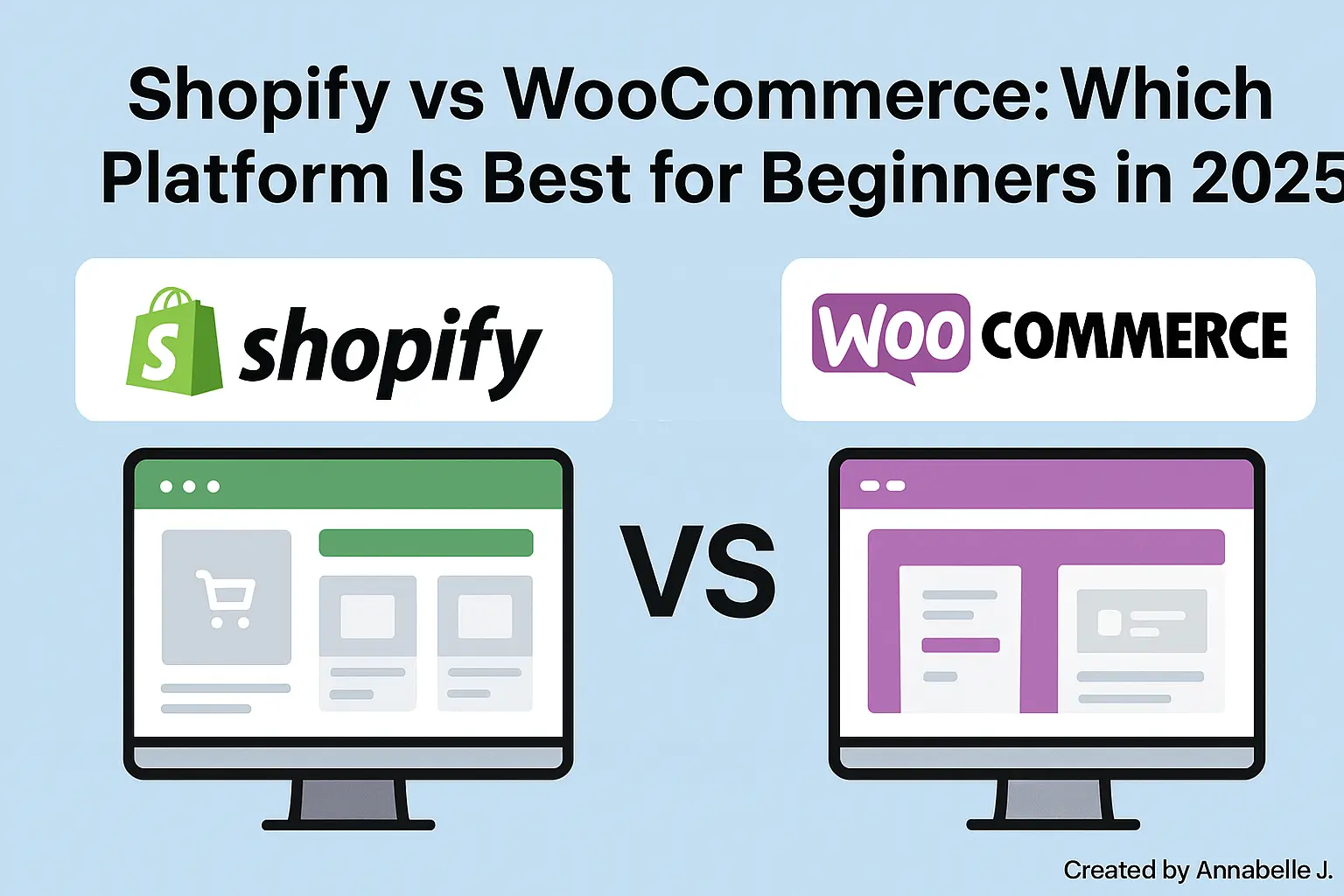
“What should I pick, Shopify or WooCommerce?” “
At Preet Web Vision, I’ve heard this same question hundreds of times.
Every week, people messaged me asking :
“I’m just starting out. Which one is simpler? “
“Which one costs less in 2025?” “
“Will Shopify hurt SEO?” “
“Is WooCommerce too hard to use?”
“Which platform grows better in the long run?”
“What if I want to add more than 100 products?”
These are big questions. Your platform decides:
- How quickly your store launches
- How easily you manage products
- How much profit you actually keep
- How fast you rank on Google
- How well your site grows
- How confidently you run your business
Picking the wrong platform wastes time, money, and effort.
Picking the right one speeds up your success.
That’s why I’m writing this very detailed, real-world, fully expanded, human-style comparison and not just a list of features you’ve seen before.
I’m giving you:
- Real stories
- Real explanations
- Real pricing
- Real difficulties
- Real advantages
- real 2025 changes
- Real beginner insights
- Real platform limitations
By the time you finish this guide, you’ll know exactly which platform is best for your personality, goals, skill level, and business model.
Let’s get started.
Chapter 1: What Shopify and WooCommerce REALLY Are in 2025—Understanding the Platforms
You need to know the DNA of each platform before you choose.
People who are new to something often think:
- Shopify is simple
- WooCommerce is hard
But that’s not the whole story.
Let’s talk about each platform in terms that people can understand.
What Shopify Really Is (2025 Edition)
Shopify is an all-in-one ecommerce platform that is hosted, which means
- Shopify hosts your store
- Shopify controls the backend
- Shopify controls the security
- Shopify handles updates
- Shopify manages performance
- Shopify gives you a ready-made dashboard
You sign up, set up your store, add products, and start selling.
That’s all.
- There is no hard installation.
- There is no server setup.
- There is no manual or technical setup for PHP, MySQL, or anything else.
- You don’t even need to know what “theme files” or “database” mean.
Shopify is like:
“Walking into an apartment that is already done and furnished.”
You just pick a spot for the couch and move in.
And beginners really like this.
What WooCommerce Really Is (2025 Edition)
WooCommerce is a free WordPress plugin for online stores.
What it means:
- You control the hosting
- You install WordPress
- You install WooCommerce
- You configure everything
- You decide the theme
- You shape the experience
- You can modify anything
WooCommerce is the opposite of Shopify.
WooCommerce is a build-your-own house.
You choose:
- The foundation (hosting)
- The walls (themes)
- The rooms (plugins)
- The decorations (customizations)
You own everything. Nothing is locked.
WooCommerce is like the house you own, while Shopify is like the apartment you rent.
There are good and bad things about both.
A Brief Comparison of 2025 Snapshots
| Feature | Shopify | WooCommerce |
|---|---|---|
| Difficulty | Very easy | Moderate |
| Cost | Higher long-term | Lower long-term |
| SEO | Good | Excellent |
| Ownership | Limited | Full |
| Design freedom | Medium | Unlimited |
| Setup time | Minutes | Hours |
| Technical skill | Minimal | Some required |
| Hosting | Included | You choose |
| Support | 24/7 official | Community + hosting |
This comparison alone gives beginners a general idea of what to do, but it’s not enough to help them make a final decision.
Let’s go deeper.
Chapter 2: How easy it is to use in 2025: Which platform is better for beginners?
If you’re just starting out, the most important thing is how easy it is to use.
People often don’t realize how many things they’ll have to do each day:
- Managing orders
- Updating products
- Adding variants
- Handling abandoned carts
- Configuring taxes
- Editing pages
- Designing banners
- Writing descriptions
- Uploading images
- Handling customer issues
A complex interface slows everything down.
So, which one is easier?
Let’s look at it in a practical way.
Shopify Ease of Use: The “Zero Stress” Choice
Even if you’ve never made a website before…
Even if you don’t know what “hosting” means…
Even if you’ve never added a plugin before…
Even if you’re afraid of technology…
You can make a store on Shopify.
You NEVER touch in Shopify:
- Server dashboards
- PHP settings
- SQL databases
- FTP
- Manual backups
- Security patches
- Plugin conflicts
Shopify makes everything easy.
A Real-Life Example
Shopify helped one of our clients, a 55-year-old bakery owner, set up her online store in just one afternoon.
- She didn’t know what DNS was.
- She didn’t know how to change the size of pictures.
- She didn’t even know what “product variants” meant.
But Shopify showed her how to do everything.
This is where Shopify really shines.
Ease of Use with WooCommerce: Not Hard, But More Work
WooCommerce is not “hard.”
It’s just more hands-on.
You will be in charge of:
- Hosting setup
- WordPress installation
- Plugin installation
- Theme selection
- Security setup
- Performance optimization
- Backup management
- Occasional troubleshooting
There is nothing that can’t be done…but you need to be curious, patient, and willing to learn to use WooCommerce.
A Real-Life Example
A beginner contacted us:
She wanted a WooCommerce store because she wanted blog + SEO flexibility.
She spent two days:
- Choosing hosting
- Understanding cPanel
- Installing themes
- Configuring taxes
- Setting up Stripe
- Optimizing product images
She learned a lot, but she said it was a little too much.
WooCommerce is very powerful once you know how it works. But the first week might be hard to understand for beginners who aren’t tech-savvy.
Winner for 2025 in Ease of Use
For absolute beginners → Shopify
For those willing to learn → WooCommerce
Chapter 3: Comparing Prices (Real-World Costs in 2025)
Most blogs compare prices in ways that don’t reflect how people actually use things.
Let’s make that better.
Shopify Pricing: What Beginners Actually Pay
Plans for Shopify in 2025:
- Shopify Starter: $5/month
- Basic: $39/month
- Shopify: $105/month
- Advanced: $399/month
Most of the time, beginners choose Basic.
But that’s not the whole story.
Other Real Costs:
| Item | Monthly Cost |
|---|---|
| Paid apps | $20–$80+ |
| Paid theme (optional) | One-time $80–$350 |
| Shopify Payments fee | 2.9% |
| Extra transaction fees (if not using Shopify Payments) | 0.5%–2% |
| Domain | $10–$15/year |
Average Monthly Cost for a Beginner in 2025:
$39 to $99 a month
Shopify costs more, but it’s worth it if you want things to be easy.
A Realistic Breakdown of WooCommerce Prices in 2025
The WooCommerce plugin is free.
WordPress is free
But you still have to pay for:
| Item | Cost |
|---|---|
| Hosting | $5–$20/month |
| Domain | $10–$15/year |
| SSL | Free with most hosts |
| premium plugins (optional) | Varies |
| premium theme (optional) | $49–$99 |
Average Monthly Cost for Beginners:
$5 to $20 per month
WooCommerce is cheaper in the long run, especially for stores that have good hosting and few premium plugins.
Pricing Winner in 2025
Tight budget → WooCommerce
Want simplicity over cost → Shopify
Chapter 4: Design, Themes, and Customization in 2025
The design of your store has an effect on:
- Trust
- Conversion
- Branding
- Customer experience
Let’s compare now.
The Design Experience on Shopify in 2025
How do Shopify themes feel?
- Clean
- Modern
- Branded
- Conversion-optimized
- Mobile-responsive
- Professionally designed
There are more than 140 official themes.
Most of them look great right out of the box.
Shopify Customization in the Year 2025
The new Shopify Theme Editor (Online Store 2.0) is the best it’s ever been.
You can change:
- Headers
- Footers
- Product templates
- Sections
- Blocks
- Checkout (limited)
But there are still some things that Shopify can’t do.
You can’t easily:
- Modify deep theme files
- Create 100% custom page layouts
- Customize checkout fully
- Change core HTML structure without coding
Design for WooCommerce in 2025
You can do the following with WooCommerce:
- Unlimited themes
- Unlimited builders
- Unlimited modifications
- Unlimited page layouts
Some popular themes are:
- Astra
- Blocksy
- Kadence
- GeneratePress
- Flatsome
- Storefront
You can make any design you can think of with a builder like Elementor, Bricks, or Gutenberg blocks.
Freedom to Customize WooCommerce
You can change:
- Checkout
- Cart
- Product pages
- Category pages
- Archives
- Ordering system
- Micro-interactions
WooCommerce is the champion of customization.
Design Winner in 2025
Beginner-friendly design → Shopify
Full customization → WooCommerce
Chapter 5: SEO—The Most Important Thing for Growth Over Time (2025 Analysis)
There are more than just keywords in SEO in 2025.
It’s about:
- Search intent
- Mobile-first design
- Speed
- Structured data
- UX signals
- Content depth
- Brand authority
So, how do the two stack up?
SEO for Shopify in 2025
Shopify has good SEO tools:
- Clean templates
- Mobile-first themes
- Automatic sitemaps
- Meta fields
- Tidy URL structure
But there are also some SEO problems with Shopify:
- Forced URL formats (
/products/,/collections/) - Limited control of robots.txt
- Limited control of schema
- Checkout page URLs cannot be customized
- Redirects require apps for complex rules
- Less control of mobile CLS/LCP metrics
You can do well on Shopify, but WooCommerce stores usually do better in niches with a lot of content.
SEO for WooCommerce in 2025
WordPress is the best SEO platform in the world, and WooCommerce is built on it.
You get:
- Rank Math or Yoast SEO
- Full custom schema
- Editable robots.txt
- Full URL customization
- Unlimited content creation
- Faster indexing
- Rich snippets
- Detailed SEO automation
- Deeper meta control
- Perfect internal linking
WooCommerce is the better platform if you want to do SEO for a long time.
Winner of SEO in 2025
Content + ecommerce → WooCommerce
Basic SEO needs → Shopify
Chapter 6: Speed and Performance (Real 2025 Benchmarks)
Speed = money
Stores that are slow lose sales right away.
Let’s look at the differences.
Shopify Speed in 2025
By default, Shopify is set up to work well all over the world.
You get:
- Built-in CDN
- Fast servers
- Optimized themes
- Automatic caching
- Image compression
Your store will be quick without you having to do anything.
WooCommerce Speed in 2025
You are the one who controls WooCommerce speed.
WooCommerce can beat Shopify if it is hosted well (SiteGround, Hostinger, NameHero).
But you must optimize:
- Caching
- Images
- Database
- CDN
- Scripts
- Plugins
WooCommerce can be very fast, but only if you set it up right.
Speed Winner in 2025
Beginner speed → Shopify
Maximum speed potential → WooCommerce
Chapter 7: Payment Gateways and Transaction Fees (2025 Update)
Beginners often skip this part, but it has an effect on your profit.
Payments on Shopify in 2025
It’s simple to use Shopify Payments, but
- Charges 2.9%
- charges extra fees if you use other gateways
- Limited in some countries
- holds payouts for certain cases
- Has occasional rolling reserves
Shopify takes a bigger cut if you don’t use Shopify Payments.
WooCommerce Payments in 2025
You can choose ANY gateway you want:
- PayPal
- Stripe
- GCash
- PayMongo
- Maya
- Bank transfer
- COD
- Cryptocurrency
- and more
No extra fees. No forced payment system.
No penalties for using external gateways.
Payment Winner for 2025
Beginners → Shopify (easier setup)
Lower fees → WooCommerce
Chapter 8: Scalability—Which Platform Will Grow Better in 2025?
Scaling means that your orders, traffic, and products all grow.
Shopify Scalability
- Shopify is great for scaling because:
- You don’t handle server strain
- No crashes during traffic spikes
- Predictable performance
- Blogs, apps, and POS integrate seamlessly
Shopify is used by stores with a lot of foot traffic, like Gymshark.
Scalability of WooCommerce
WooCommerce can grow a lot if the hosting is strong.
WooCommerce powers brands like Singer and Weber.
But scaling WooCommerce requires:
- Strong hosting
- Good caching
- Optimized database
- efficient plugins
- Content delivery network
WooCommerce is more flexible, but it needs more technical support.
Scalability Winner in 2025
Effortless scaling → Shopify
Full customizable scaling → WooCommerce
Chapter 9: Dropshipping in the Year 2025
Both platforms allow dropshipping, but in different ways.
Shopify Dropshipping
Shopify is the best for dropshipping because:
- DSers
- Zendrop
- Spocket
- Printful
- Gelato
- CJ Dropshipping
The integration goes very smoothly.
Shopify is the best platform for people who are new to dropshipping.
Dropshipping with WooCommerce
Dropshipping works great with WooCommerce too:
- AliDropship
- WooDropship
- Spocket
- Printful
- Dropified
It gives you more control and costs less, but it takes longer to set up.
Dropshipping Winner for 2025
Fastest setup → Shopify
Lowest costs → WooCommerce
Chapter 10: Blogging and Content Marketing (2025 Reality)
The truth is that if you want to write blogs to help your store grow (which we highly recommend),
Shopify Blogging
Blogging on Shopify is:
- Simple
- Functional
- Enough for basic posts
But limited for:
- Advanced SEO
- Content clusters
- Dynamic linking
- Editorial workflows
- Indexing control
Blogging with WooCommerce and WordPress
There’s no doubt that WordPress is the best platform for blogging.
It gives:
- Categories
- Tags
- Custom taxonomies
- Content templates
- Reusable blocks
- Advanced SEO
- Internal linking
- Rich schema
- Deep content structures
WordPress is the best ecommerce platform for content marketing.
Blogging Winner 2025
Simple blogs → Shopify
Powerful blogs → WooCommerce
Chapter 11: Security (2025 Breakdown)
Shopify Security
Shopify takes care of everything:
- SSL
- PCI compliance
- Server stability
- Firewalls
- Backups
- Fraud detection
People who are new to this love it.
Security for WooCommerce
The security of WooCommerce depends on:
- Hosting
- Plugins
- Backups
- Updates
It CAN be very safe, but you have to be careful.
Winner of Security
Beginner-friendly → Shopify
Full control → WooCommerce
Chapter 12: Customer Support (2025)
Shopify Support
- 24/7 chat
- 24/7 email
- Fast response
- Beginner-friendly
One of the best things about Shopify is its customer service.
WooCommerce Support
You get:
- Community forums
- Hosting support
- Theme support
- Plugin developer support
But there isn’t just one main support team.
Support Winner 2025
Shopify
Chapter 13: Real-Life Beginner Situations (2025)
These are real beginner profiles and the best platform for each one.
Scenario 1: A complete beginner with no tech skills
Shopify is the best choice.
Scenario 2: Wants full control but has a tight budget
WooCommerce is the best choice.
Scenario 3: Wants to write a blog and sell things
WooCommerce is the best choice.
Scenario 4: Wants to use dropshipping
Shopify is the best choice.
Scenario 5: Wants special features
WooCommerce is the best choice.
Scenario 6: Wants the fastest start
Shopify is the best choice.
Chapter 14: The Final Honest Verdict for 2025
There is no universal winner.
There is only the best platform for YOU.
If you care about:
- Simplicity
- Guidance
- Speed
Pick Shopify.
If you care about:
- Flexibility
- Ownership
- SEO
- Custom features
Choose WooCommerce.
Both platforms are very useful.
You can make money with both.
Both can grow.
The right match depends on your personality.
Conclusion
In 2025, one of the most important choices you’ll have to make is between Shopify and WooCommerce.
And now that you have this complete guide, you know the real differences, not the vague summaries that most blogs give.
If you’re still not sure, or if you want help from an expert with setting up, designing, or optimizing your store…
📌 We can help!
We make high performance Shopify and WooCommerce websites at Preet Web Vision that are ready for 2025 in terms of speed, SEO, conversions, and growth.
- Phone: +63-9633112000
- Email:hello@preetwebvision.com
- Website: Preet Web Vision
- YouTube (English): Preet Tech Ideas
- YouTube (Hindi): Preet WebXP
We’ll make a store that looks professional, works quickly, and makes money, no matter if you’re just starting out or ready to grow.
Do you have questions or want suggestions based on your business idea?
Leave a comment with your thoughts, and I’ll respond personally. I’d love to help you figure out the best way to go with your ecommerce business in 2025.